Embracing the Spoonie Life: A Life Often Misunderstood

Some days, even lifting your head off the pillow feels like you’re spending tomorrow’s energy just to survive today. Living with chronic illness often feels lonely, confusing, and exhausting—even when you’re doing everything “right.” If you’re reading this, you might be someone who needs to hear that you’re not alone and that it’s okay to not be okay..
A few years after being diagnosed with Graves disease in 2006, I didn’t realize just how lonely I really was in this walk, and even more so with the rare conditions I have been diagnosed with since. I found myself craving a support system that truly understood what life with an autoimmune disease felt like at the time. The support I had was okay, but it wasn’t the same as connecting with people who get it—the ones who understand the quiet, everyday struggles we carry that aren’t always visible.
I was then introduced to the Spoonie community, a chronic illness community that walks, talks, and breathes the same life I was living. After years of being dismissed, gaslit, and feeling unheard, I felt led to create my page Running Out of Spoons: a little corner of the internet to share awareness, my journey, and the real experiences so many of us live through. My hope is that anyone who lands here feels understood, validated, and a little less alone.
Somewhere along my own journey, spoons began to make sense in a way I didn’t expect. The Spoon Theory became the first metaphor that actually explained what I had been trying to articulate for years—waking up every day with limited energy, constantly budgeting it, and still ending the day completely drained. If you’re someone living with chronic illness or trying to understand it better, you’re in the right place.
And if you’re new to this world, you might be wondering—what a Spoonie is in the first place and why spoons matter to people like me. I’m going to explain how this simple metaphor created a community that so many of us cling to.
Why Are We Called Spoonies?
The term “Spoonie” originated from The Spoon Theory, a metaphor created by Christine Miserandino in 2003. Christine, who has lupus, used spoons to explain her energy limitations to a friend during a conversation in a restaurant. She handed her friend a handful of spoons and asked her to imagine that each one represented a limited amount of energy.
In the analogy, she explained that a healthy person starts the day with an unlimited energy supply of spoons, while someone with a chronic illness begins with a limited number of spoons. Every task—getting out of bed, brushing your teeth, making breakfast—costs a spoon (or two or three). Once your spoons are gone, so is your energy.
This metaphor resonated deeply with many in the chronic illness community, and “Spoonie” became a widely embraced identity for those who live with limited energy and must carefully manage it.
Is This You?
If you struggle to explain why you’re exhausted after a shower, if you ration your energy like currency, if your body crashes before your mind is ready, or if you plan your day around symptoms you can’t predict, then you, too, are living the Spoonie life.
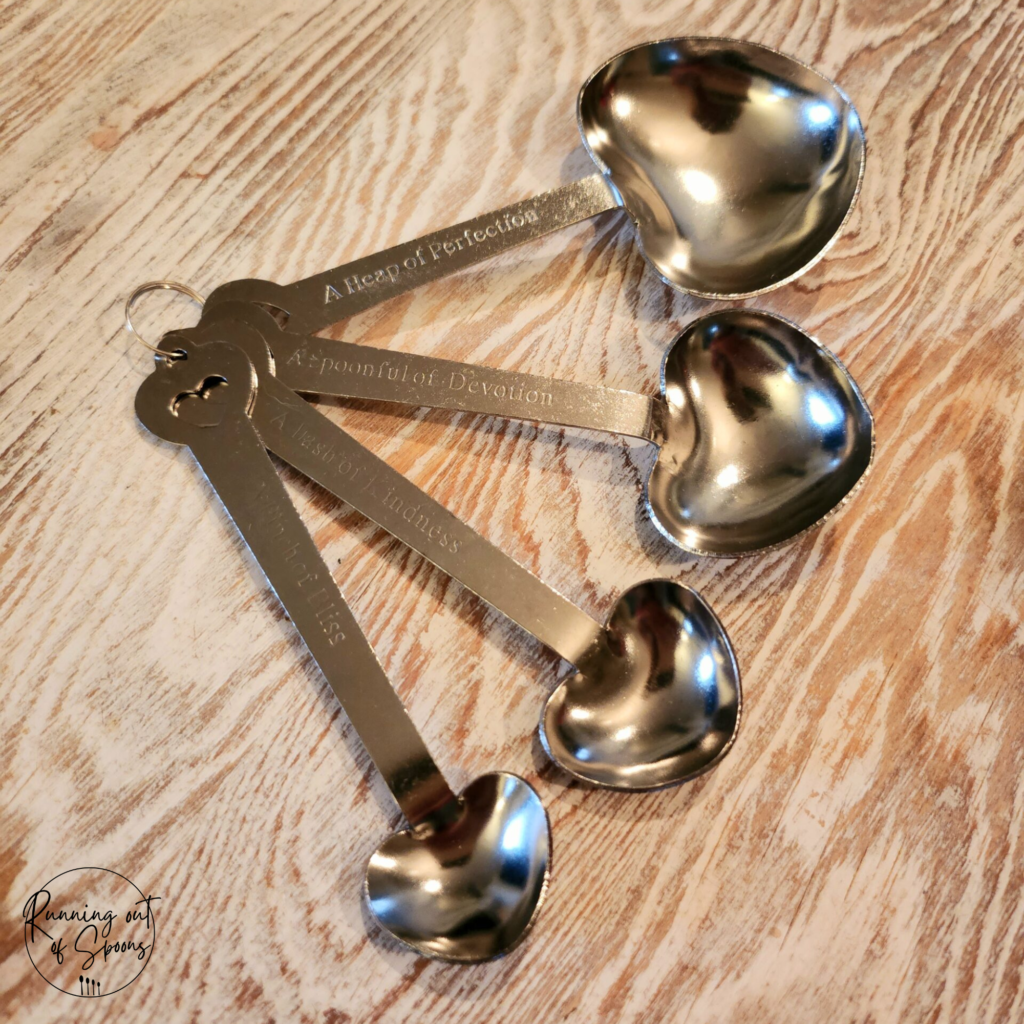
Some days the spoons are gone too fast,
your strength unsure, your hope low-cast.
But even in the quiet ache,
when holding on feels like a break,
there’s someone here who knows your tone—
your heart is seen. You’re not alone.
-From one Spoonie to another ❤️
Why The Spoon Theory Matters
The Spoon Theory helps make the invisible visible. It gives us a language to describe our daily struggles that are often hard to explain to those who don’t live it. I often say, “Some of the hardest battles fought are the ones that can’t be seen.” This is the reality for so many of us. Looking in from the outside, you would never know that I struggle with blow-drying my hair some days or that sometimes my husband has to help me take baths because of my muscle wasting and weakness.
Just explaining our reality can be exhausting, and that explanation alone can cost us spoons.
When you’re a Spoonie, you have to learn how to prioritize activities, weighing the importance and impact of each one. Do I fold laundry today or go to the grocery store? Do I finally return that phone call or take a much-needed shower? Every decision involves weighing the cost in spoons. It’s so unpredictable—some days we feel okay, and the next, we’re back in bed. And even more inconveniently, it can change within minutes.
I think you get the idea that we’re constantly having to pick and choose. We may have to make difficult choices, sacrificing some tasks to preserve enough energy for essential responsibilities or things we enjoy doing. So as you can imagine, every task, big or small, costs us spoons, and it’s a constant struggle to keep up with those around us.
If it involves energy, it’s gonna cost us spoons.
Borrowing Spoons
Beyond just prioritizing, we also deal with something called spoon debt. If we push ourselves too hard today, we start tomorrow with even fewer spoons. On the few days we feel our best, we tend to push ourselves and take on more than we should because we know that it may be our only chance for a while to get things done. Our recovery times surely reflect payback for overdoing it. I make sure to take advantage of the “good days”, but I also pay heavily for it.
Personally, I often feel like I take one step forward and five steps back. Many of us live in constant spoon debt, which is why pacing and prioritizing are so crucial.
Who Is a Spoonie?
Being a Spoonie means adapting to life in a way that prioritizes well-being and celebrates small wins. It’s about recognizing that each of us has a different story. My struggles may not look like yours—but that doesn’t make either one less valid.
The Spoonie label refers to people living with long-term chronic illness or disability that significantly impacts their energy and daily functioning. We can’t always “push through”—doing so can result in symptom flares or crashes.
I don’t like to put a limit on “who is considered a Spoonie” because there are so many different chronic illnesses that aren’t mentioned here, and some with very little research or awareness. Here are just some of the conditions that fall under the Spoonie umbrella:
- Autoimmune disorders (e.g., lupus, thyroid disease, MS)
- Chronic pain (e.g., fibromyalgia, CRPS)
- ME/CFS (Myalgic Encephalomyelitis/Chronic Fatigue Syndrome)
- Mental health conditions (e.g., depression, anxiety, PTSD)
- Neurological disorders (e.g., epilepsy, Parkinson’s, Migraines)
- Genetic conditions (e.g., Cystic Fibrosis, Huntington’s)
- POTS and other forms of dysautonomia
- Ehlers-Danlos Syndrome (also genetically related) and connective tissue disorders
- Chronic Lyme disease and mold toxicity
- Chiari Malformation
- Long COVID
- CIRS (Chronic Inflammatory Response Syndrome)
- Cancer and survivorship-related fatigue
Common Challenges
With limited spoons comes a set of challenges that many of us navigate daily—some invisible, some overwhelming, and all deeply real. Though our diagnoses may differ, many Spoonies face some of these similar challenges:
- Limited energy – Chronic fatigue, brain fog, and pain are energy-draining
- Physical limitations – Pain or mobility issues can make everyday tasks difficult
- Unpredictable symptoms – One hour can look very different from the next
- Emotional toll – Anxiety, depression, medical trauma, and gaslighting from others are sadly common
- Social stigma – “Unreliable?” “Lazy?” “Hypochondriac?” or my favorite, “But, you don’t look sick”. We’ve heard it all
- Financial strain – Many treatments, specialists, and medications aren’t covered
- Frequent Appointments– Playing phone tag with doctors, routine lab work, traveling
The list goes on……..
Managing Life as a Spoonie
Life as a Spoonie and living with a chronic illness or disability, means finding ways to make life a little easier and embracing lifestyle adjustments and self-care practices to manage our conditions and preserve precious energy.
Although some of our conditions are incurable and all we can do is treat the symptoms, I believe these adjustments are so important to help conquer daily challenges, reduce symptoms, nurture our well-being, and stay sane. Here are some things I have found that are common while living with chronic illness and are things I’m actively trying to work on myself:
Pacing & Prioritizing
Many of us have become masters of pacing ourselves, strategically allocating our energy throughout the day. We prioritize tasks, focusing on what matters the most to us and finding efficient ways to accomplish them (allocating our spoons the best we can). By mastering the art of pacing, we prevent energy drain and sidestep those symptom flares like the warriors we are! If it’s not worth losing a spoon over, it can wait.
Rest & Recovery
Rest and quality sleep are vital for Spoonies. And I know you’re probably thinking that you may already sleep enough. But hear me out. We prioritize getting the restorative sleep our bodies crave and allow ourselves guilt-free breaks and downtime during the day. By honoring our need for rest, we recharge our energy reserves and relieve ourselves from the dreaded burnout. It’s important to listen to our bodies, especially when they tell us to rest. Because if we don’t listen to our body, then it will force us to listen, as you probably have already experienced. We aren’t helpful when our tank is on empty. So rest as you can and give yourself some grace.
Energy Conservation
We’ve got a bag of energy-saving tricks up our sleeves! We use assistive devices or mobility aids to ease physical strain, transform our environments into cozy and convenient havens, and break tasks into bite-sized pieces. We’re all learning to become masters of organization (I’ve got a lot of work to do), planning ahead, and using nifty tools and technologies to conserve energy. And trust me, I know planning in itself is draining, but if you can take baby steps to plan instead of all at once, then it’s so worth it.
Nutrition & Gentle Movement
As cliché as it may sound, nutrition and gut health are so important, and being mindful of what we put into our delicate bodies is vital, especially if you have food sensitivities, allergies, MCAS, and more. While I obviously can’t reverse my genetic connective tissue disorder, removing inflammatory foods and other things that I know my body can’t tolerate due to sensitivities, especially gluten, has helped calm down some of my symptoms across the board for me. Because the less inflammation in our bodies, the better, and any type of relief I can get is a win for me!
Try to engage in gentle exercises or movements within your capabilities without overdoing it (listen to your body), and always keep your body hydrated. For those of us living with POTS, we really have to keep up with our water and electrolyte intake since we don’t retain our fluids well. Our blood volume is usually low as well. Anybody who is dehydrated will usually feel extremely drained and sick and some electrolytes can make a huge difference.
Emotional Well-being
Managing stress and nurturing our emotional well-being should be high on our priority list. We unapologetically have therapy or counseling if needed, indulge in relaxation techniques like reading a book, deep breathing exercises, praying, journaling, and find comfort in hobbies that bring us joy and melt away stress. Oh, and don’t forget our squad of supportive friends, family, and online communities who lift us up!
Quick Reminders For Helping To Preserve Spoons
- Prioritize tasks with the “must / should / could” method- can it wait until tomorrow?
- Say NO without guilt- Don’t ever feel bad for prioritizing your well-being
- Rest as you can and need to- Don’t wait until you crash
- Prepare if you can for the next day- Sit things out for the next day if possible
- Journal symptoms- Track energy patterns and anything that might be symptom-triggering for future appointments
- Hydration- Get your water bottle filled up first thing in the morning
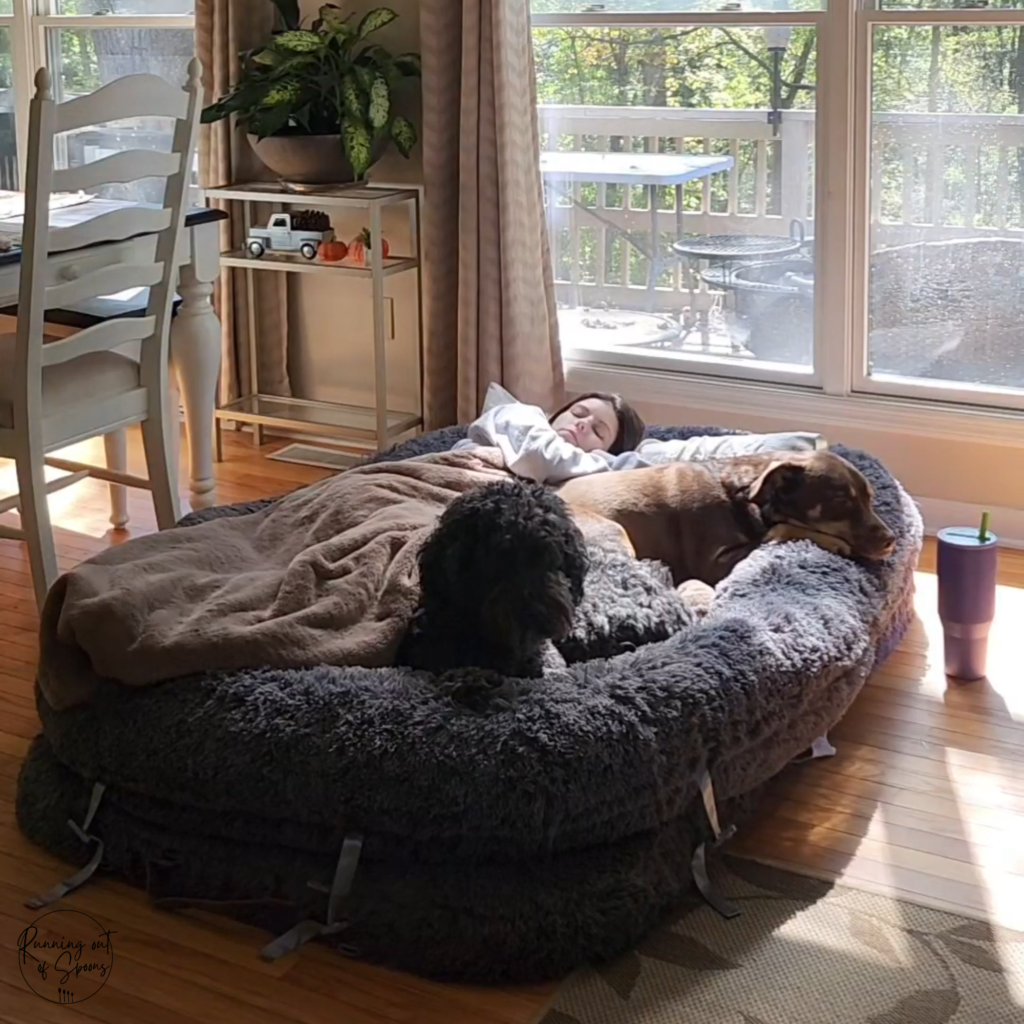
Embracing the Unseen Journey
Living with an invisible illness can feel like carrying a silent weight — one that others can’t see or understand but that we feel every moment of every day. It’s not just the physical symptoms; it’s the emotional toll, the isolation, and the constant need to explain or justify what we’re going through. We may appear strong on the outside, but our battles are fought silently, every single day. Every day looks different for us, and while yes, we may be able to do something one day, we may be completely incapable the next day or even minute. That unpredictability is one of the hardest parts of living with chronic illness, and it’s why grace, understanding, and empathy matter so much.
You’re Not Alone: Support and Advocacy
As a spoonie, I’ve discovered a new perspective on life—one that embraces self-care, celebrates small victories, and finds beauty beyond the challenges. I’ve also learned that we all have our own story, and my struggles may not be the same as the next Spoonie’s. We each have our own story to tell.
One of the greatest gifts in this journey is finding others who get it. Support—both emotional and practical—is vital. It’s important to seek out understanding communities, both online and offline. Online communities, especially on Facebook and TikTok, have connected me with people who understand the ups and downs and the judgment we face. I’ve made some good friends along the way. These communities become safe spaces to share our experiences, offer advice, and receive the empathy and validation we search for.
Every time we lift our voice, we’re not just coping—we’re advocating. We’re changing the narrative around chronic illness, demanding better care, accessibility, and compassion.
Misunderstood, But Never Alone
Living with a chronic or invisible illness is far from predictable — it’s a constant balance between resilience and exhaustion, between doing our best and honoring our limits. Yet each day, we find a way to move forward, not just for ourselves, but for others who walk a similar path. Whether you’re navigating this journey personally or learning to support someone who is, your presence matters. Together, by raising awareness and leading with empathy, we can help build a world that truly understands the strength it takes to live unseen battles ❤️
Come Hang Out With Me
I created this space because I spent years feeling unseen, unheard, and misunderstood.
If this post made you feel even a little more validated, I’d love for you to stick around and be part of this little Spoonie corner of the internet.
💌 Email Community
Get gentle reminders, cozy encouragement, Spoonie-friendly tips, and updates from my own journey.
Sign up below — I’d love to send support right to your inbox.
🎥 TikTok: @spoonie_girl
▶️ YouTube: @OutofSpoonsWithAmanda
Join me for real-life Spoonie moments — the honest days, the hard days, and the hopeful ones.
🙏 Need prayer?
If you’re walking through something heavy, you’re welcome to reach out.
I would love to pray for you. My faith has got me through some of the hardest parts of my life and I will continue to rely on it!
Send me your prayer requests, unspoken or spoken ❤️
📨runningoutofspoons1@gmail.com
Gentle Hugs,
Amanda
References:
1. The Spoon Theory — Christine Miserandino
https://butyoudontlooksick.com/articles/spoon-theory/
